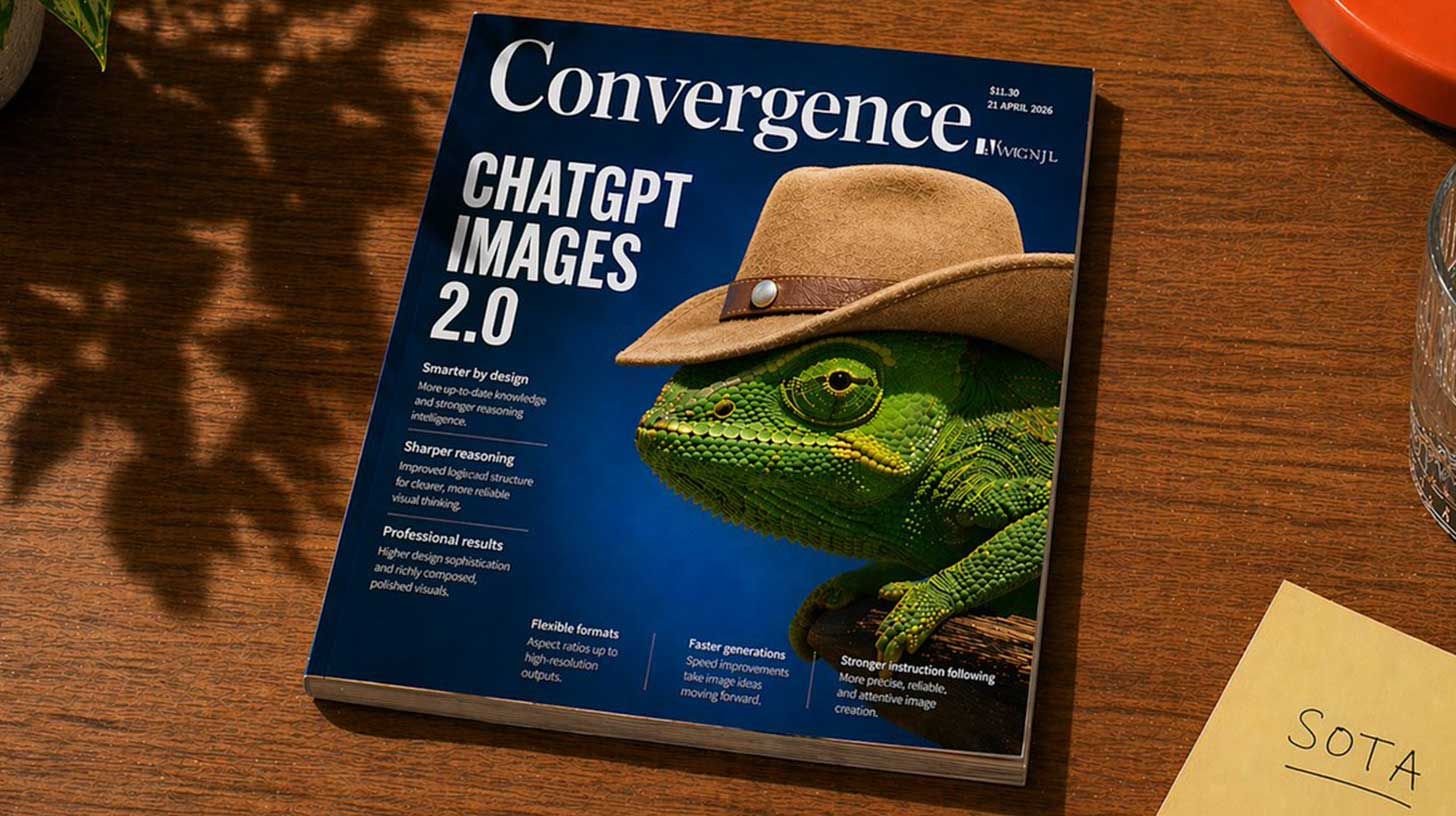
🎆OpenAI breaks new ground with Images 2.0
OpenAI officially rolled out ChatGPT Images 2.0, an upgraded image generation model that had been going viral in testing and is being called "the smartest image generation model ever built."
- —Images 2.0 "thinks" before generating, allowing it to plan compositions, search the web for references, and self-check outputs for errors
- —The model took the No.1 spot on Arena AI's text-to-image leaderboard by a wide margin, sweeping every generation category
- —Supports 2K resolution, up to 8 images per generation, aspect ratios from 3:1 ultrawide to 1:3 tall, plus multilingual text rendering
- —Sam Altman called the upgrade "like going from GPT-3 to GPT-5 all at once"; now available in ChatGPT, Codex, and the API
Why it matters: OpenAI is back on top of the image generation race with "thinking-based generation" that solves long-standing text rendering issues and opens entirely new creative workflows.

🕵️ Meta logging employee keystrokes to train AI agents
Meta is running a Model Capability Initiative (MCI) that records screenshots, keystrokes, and mouse activity on U.S. employees' work laptops without opt-out, capturing real data to train AI agents and sparking internal backlash.
- —Capture scope skews toward developers, logging activity in VSCode, internal AI assistant Metamate, Google Chat, and Gmail
- —Business Insider published the internal memo; CTO Andrew Bosworth reportedly responded to concerns by saying there is "no option to opt out"
- —About 8,000 Meta staffers are set to exit on May 20, with MCI starting to log their workflows a month before their end date
- —The memo framed the move as a way for employees to help models get better "simply by doing their daily work"
Why it matters: Meta brought the robotics lab playbook of recording human behavior to train systems into the software world, and the backdrop of mass layoffs makes this indiscriminate surveillance feel particularly dystopian.
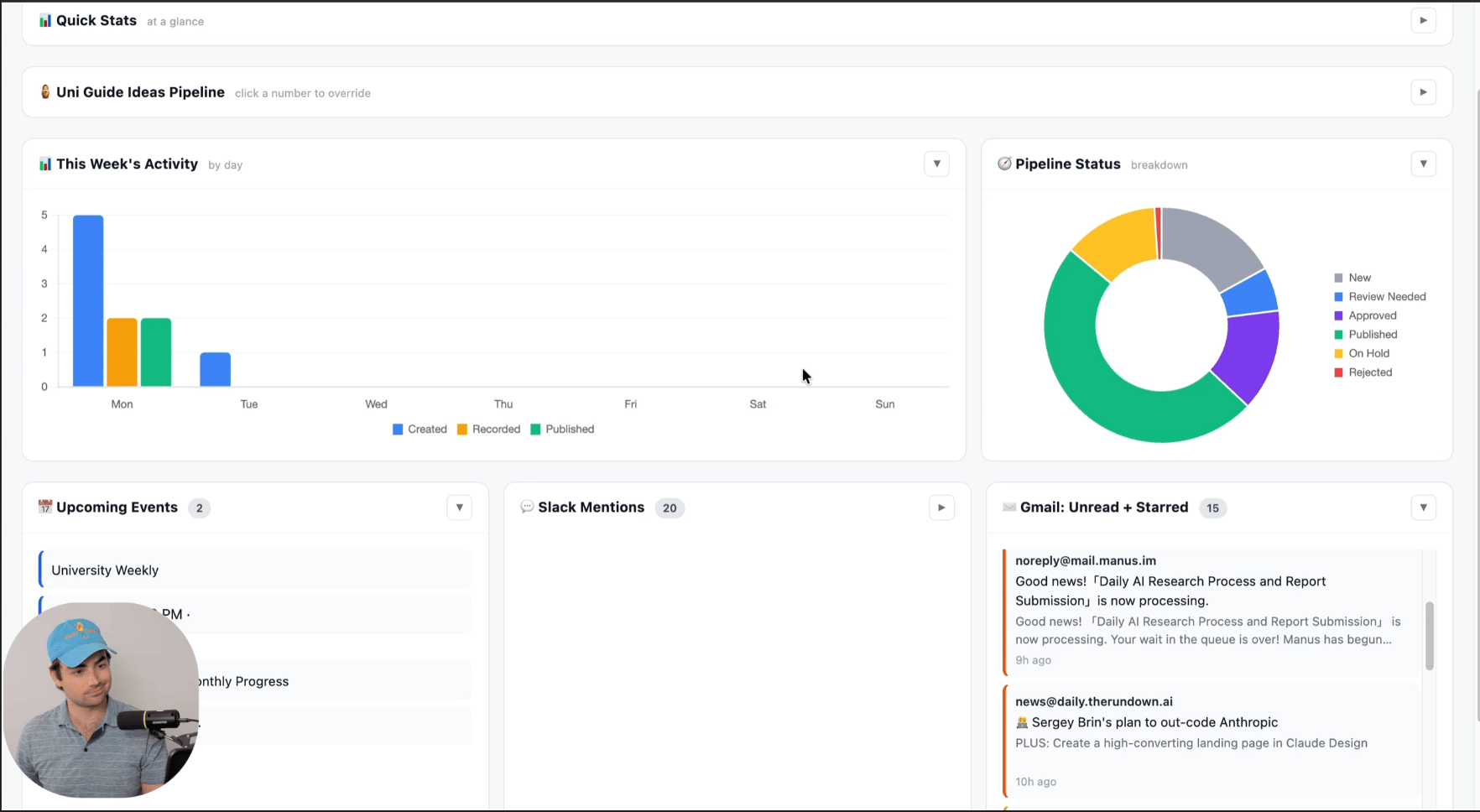
🎛️ Build a command center with Claude Live Artifacts
This new guide shows how to build a real-time daily command center in Claude Cowork using Live Artifacts, eliminating the need to open Slack, email, calendar, tasks, and docs one by one.
- —Have Claude interview you about your workflow, KPIs, and urgency standards before proposing command center modules
- —Build a modular dashboard with Today, This Week, and This Month views, integrating KPI cards, stats, charts, and app feeds
- —Add priority labels and ranking rules that auto-categorize by urgency, deadlines, and decisions needed
- —Embed actionable buttons like "Plan my day," "Draft replies," or "Prep meetings" to execute actions directly from the dashboard
Why it matters: Live Artifacts are evolving from display tools into operational hubs, and a single prompt can consolidate scattered work information streams into an interactive command panel.
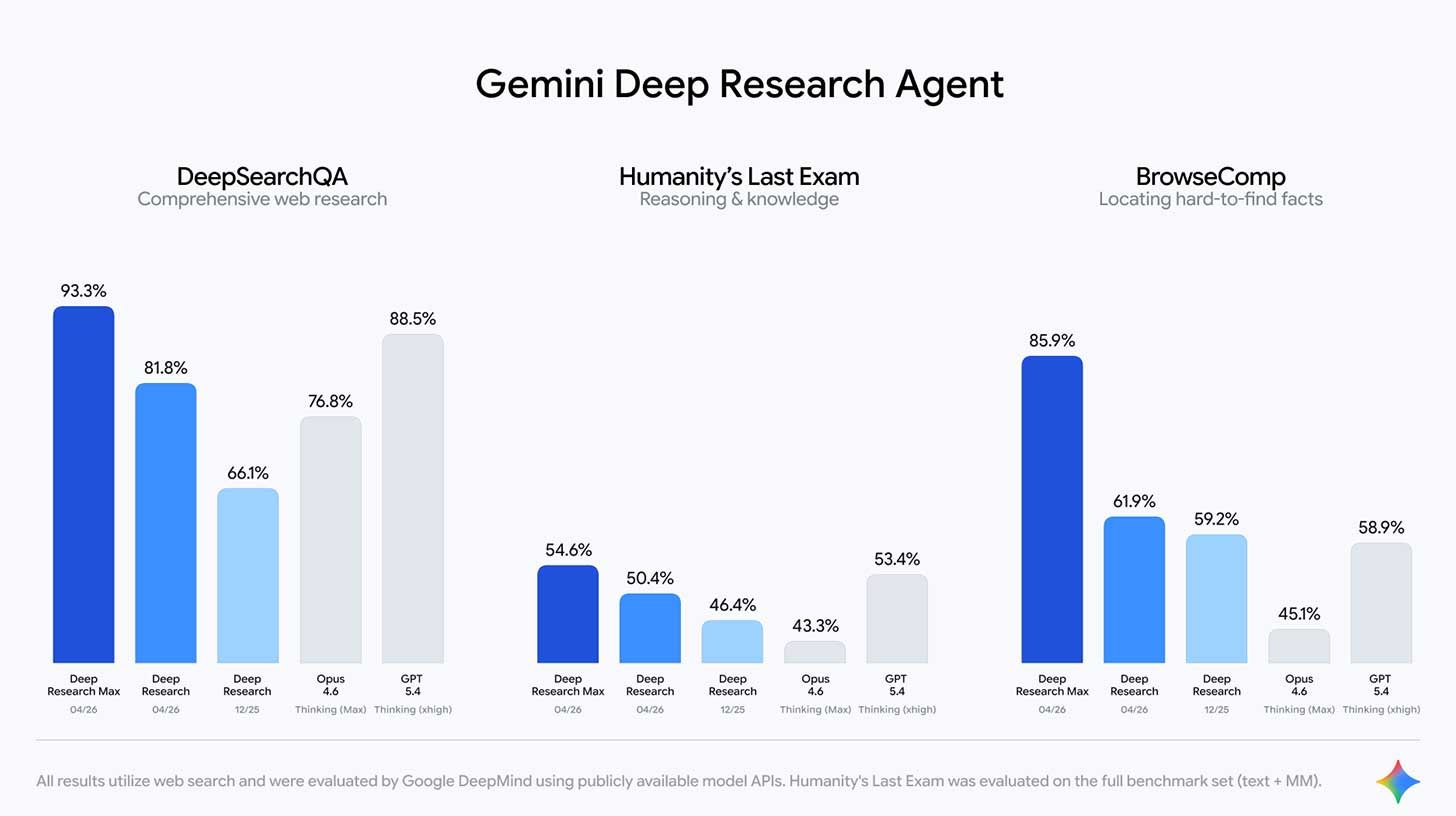
📚Google pushes Deep Research Agent to the max
Google released Deep Research and Deep Research Max, two research agents powered by Gemini 3.1 Pro that generate full research reports from the web, uploaded files, or any MCP server, complete with charts and infographics.
- —Both agents run on the same research engine inside NotebookLM, replacing Google's December preview
- —Google's benchmarks show Max delivering major jumps in retrieval and reasoning over previous versions and rivals like Opus 4.6 and GPT 5.4
- —Users can combine open-web search with MCP servers and file uploads, or cut off external access to search only private data
- —Google is already working with PitchBook, S&P, and FactSet to build MCP servers piping paid financial data into research workflows
Why it matters: Research-heavy roles like analysts, consultants, and lawyers have long been an obvious target for AI automation. Google has turned that threat into a priced API call any developer can wire into a product.